
Diode vs Nd Laser: Which Is Better for Indian Skin?
- Posted by Dermaworld
- 01 September 2026
- Laser Hair Reduction
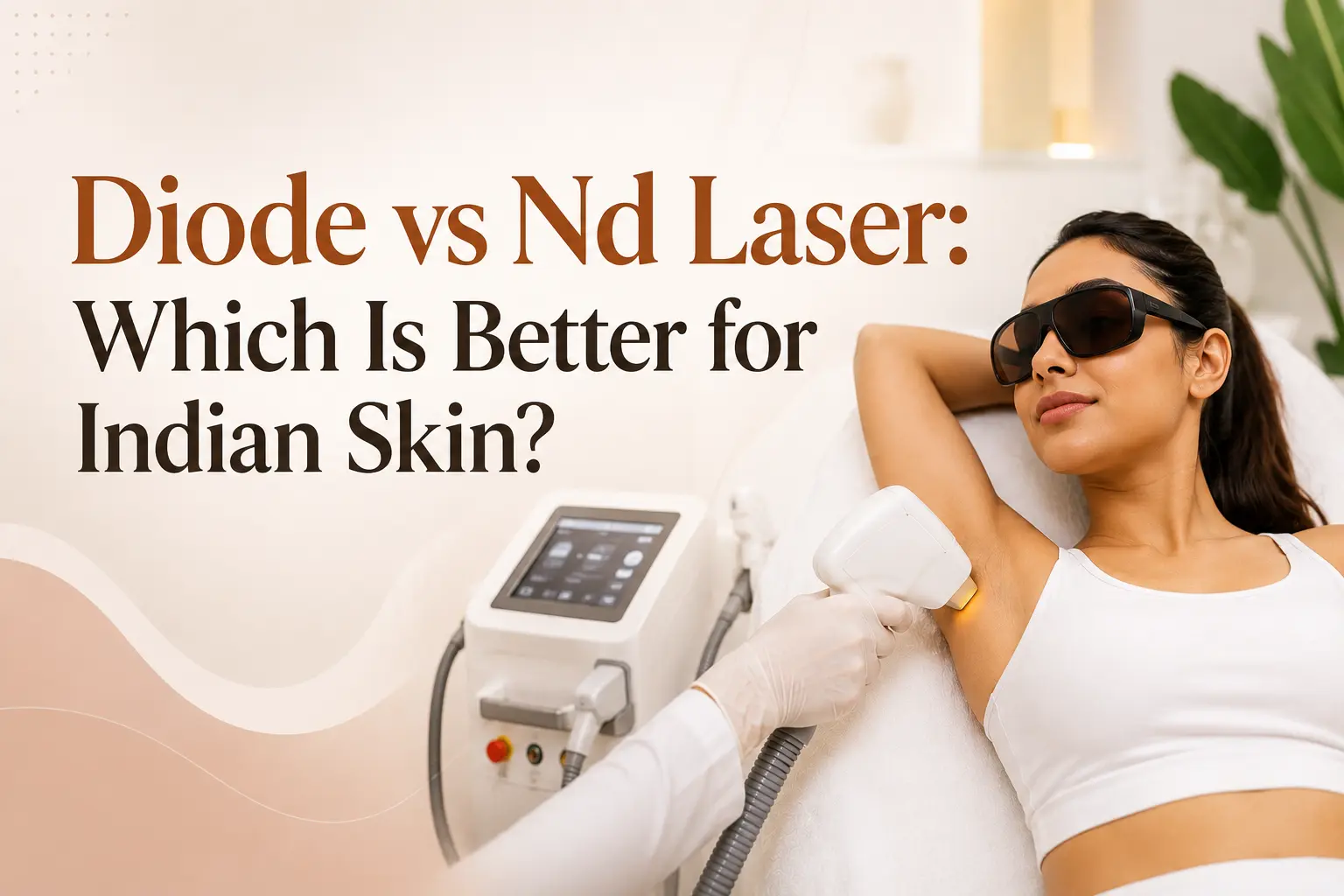
Laser hair removal has become a popular solution for people who want smoother skin and long-term reduction in unwanted hair. However, choosing the right laser technology is especially important for Indian skin, which generally falls across a wide range of medium to deeper skin tones. Two of the most commonly used technologies are Diode and Nd:YAG lasers.
So, which one is better for Indian skin? The answer depends on your skin tone, hair type, treatment area, and individual response. Understanding the differences can help you make a more informed decision when considering Laser Hair Removal in Delhi.
Understanding Diode Laser Hair Removal
A Diode laser commonly operates around the 800–810 nm wavelength. It targets melanin in the hair follicle and delivers controlled heat to damage the follicle while minimizing unnecessary effects on surrounding skin.
Diode lasers are often effective for people with light to medium-brown skin and dark, coarse hair. They can provide excellent hair reduction when the settings are appropriately adjusted according to the patient's skin and hair characteristics.
Benefits of Diode Laser
-
Effective for dark and coarse hair
-
Suitable for many Indian skin tones
-
Can treat areas such as the face, arms, legs, underarms, and back
-
Often provides efficient treatment for larger body areas
-
Can produce long-term hair reduction with multiple sessions
However, because Diode lasers have a strong interaction with melanin, treatment parameters need to be carefully selected for darker skin tones. Incorrect settings can increase the risk of pigmentation or irritation.
What Is Nd:YAG Laser Hair Removal?
Nd:YAG laser technology generally uses a 1064 nm wavelength. Its longer wavelength penetrates deeper into the skin and has comparatively less absorption by epidermal melanin.
This characteristic makes Nd:YAG particularly valuable for people with darker skin tones, including many Indian patients with higher levels of pigmentation.
Benefits of Nd:YAG Laser
-
Better suited to darker skin tones
-
Deeper penetration into the hair follicle
-
Lower melanin absorption in the superficial skin
-
Can be useful for coarse and deeper-growing hair
-
Appropriate for several body areas when professionally administered
Nd:YAG does not mean that every patient will automatically achieve better results. Hair color, thickness, hormonal factors, treatment area, and laser settings still play an important role.
Diode vs Nd:YAG: Which One Is Better?
There is no universal winner between Diode and Nd:YAG lasers. Both can be effective, but their suitability differs depending on the patient's characteristics.
| Feature | Diode Laser | Nd:YAG Laser |
|---|---|---|
| Common wavelength | Around 800–810 nm | 1064 nm |
| Skin suitability | Light to medium-brown skin | Medium to darker skin tones |
| Melanin absorption | Higher | Lower |
| Penetration | Moderate | Deeper |
| Dark skin safety | Requires careful settings | Often preferred |
| Coarse dark hair | Effective | Highly effective |
| Treatment choice | Depends on skin and hair | Often advantageous for darker skin |
For many Indian patients with medium to darker skin, Nd:YAG may offer an important safety advantage because its wavelength is less readily absorbed by epidermal melanin. For lighter Indian skin with dark, coarse hair, a Diode laser may be an excellent option.
Ultimately, the best laser is the one selected according to your individual skin type and hair characteristics—not simply the newest or most powerful machine.
Why Indian Skin Requires Specialized Laser Settings
Indian skin can contain relatively high levels of melanin even when the overall complexion appears light or medium. This makes proper laser selection and parameter adjustment particularly important.
A qualified professional should assess:
-
Skin tone and pigmentation
-
Hair color and thickness
-
Treatment area
-
Previous tanning or sun exposure
-
History of pigmentation
-
Sensitivity of the skin
-
Presence of hormonal hair growth
The laser's wavelength, fluence, pulse duration, spot size, and cooling method may all need to be adjusted for the individual.
This personalized approach can help improve results while reducing the likelihood of unwanted side effects such as excessive redness, burns, blistering, or temporary pigmentation changes.
Is Laser Hair Removal Permanent?
Laser hair removal should generally be understood as long-term hair reduction, rather than guaranteed permanent removal of every hair.
Hair grows in different phases, and laser treatment is most effective when the hair is in an appropriate growth phase. Because all hairs are not growing simultaneously, several sessions are normally required.
After completing an initial treatment course, many patients experience a significant reduction in hair growth. Maintenance sessions may sometimes be recommended because hormonal changes and other factors can stimulate new growth.
Therefore, when searching for a Permanent Hair Removal Clinic in Delhi, look for a clinic that explains realistic outcomes rather than promising that every hair will disappear permanently after a few treatments.
How Many Sessions Are Needed?
The number of sessions varies from person to person. Factors such as hair density, thickness, skin type, treatment area, and hormonal influences can affect the treatment schedule.
Many patients require a series of sessions spaced several weeks apart. Facial hair may behave differently from body hair because hormonal influences can affect growth.
Your dermatologist or laser specialist can create a personalized treatment plan after evaluating your skin and hair.
How to Choose the Right Laser Clinic in Delhi
Technology is only one part of successful laser hair removal. The experience of the treating professional and the quality of assessment are equally important.
When selecting a clinic, consider:
-
Professional skin assessment: Your skin tone and hair characteristics should be evaluated before treatment.
-
Appropriate laser technology: The clinic should have technology suitable for different Indian skin types.
-
Experienced professionals: Treatment should be performed under appropriate medical supervision.
-
Cooling and safety measures: Effective cooling can improve comfort and protect the skin.
-
Transparent expectations: The clinic should explain the likely number of sessions and possible results.
-
Aftercare guidance: Proper instructions regarding sun exposure, skincare, and irritation can support recovery.
Diode or Nd:YAG: What Should You Choose?
If you have a lighter to medium Indian skin tone and dark, coarse hair, Diode laser may provide excellent results. If you have a darker skin tone or are particularly concerned about epidermal pigmentation, Nd:YAG may be a more suitable choice.
However, skin tone alone should not determine the treatment. A professional assessment is essential before choosing the wavelength and treatment settings.
Final Thoughts
Both Diode and Nd:YAG lasers can be effective options for Indian skin when used correctly. Diode lasers can work particularly well for many light to medium skin tones, while Nd:YAG is often preferred for darker skin because of its deeper penetration and lower absorption by epidermal melanin.
If you are considering Laser Hair Removal in Delhi, focus on personalized treatment rather than choosing a laser based solely on its name. At Dermaworld Clinic, a proper evaluation of your skin type, hair characteristics, treatment area, and individual requirements can help determine the most appropriate approach for safe and effective long-term hair reduction.
Choosing the right technology, correct settings, experienced professionals, and realistic expectations can make your laser hair removal journey more comfortable and effective.
Recent Posts
- AI and Advanced Laser Technology: The Future of Laser Hair Removal
- Laser Hair Removal for Men: Back, Chest, and Beard Grooming
- Diode vs Nd Laser: Which Is Better for Indian Skin?
- Is Laser Hair Removal Safe for Indian Skin Tone? Your Guide to Smooth Skin
- Bikini Laser Hair Removal: A Convenient Solution for Smooth, Comfortable Skin
Other Blogs
AI and Advanced Laser Technology: The Future of Laser Hair Removal
- Posted by Dermaworld
- 09 October 2026
The beauty and skincare industry is evolving rapidly with the introduction of artificial intelligence (AI) and advanced laser technology. Laser hair removal has become a popular choice for people seeking long-term hair reduction without the hassle...
Laser Hair Removal for Men: Back, Chest, and Beard Grooming
- Posted by Dermaworld
- 17 September 2026
Men’s grooming is no longer limited to haircuts and shaving. Many men are now looking for practical ways to manage unwanted body and facial hair without constantly relying on razors, waxing, or trimming.
...
Is Laser Hair Removal Safe for Indian Skin Tone? Your Guide to Smooth Skin
- Posted by Dermaworld
- 25 August 2026
If you've been researching Laser Hair Removal in Delhi, chances are you've also come across a common worry: "Will this treatment actually work on my skin tone, or will it cause burns and dark patches?" It's a fair question.
...